
Il mondo circostante
Jacob von Uexküll introduce in biologia il concetto di Ambiente, Umwelt, mondo circostante.
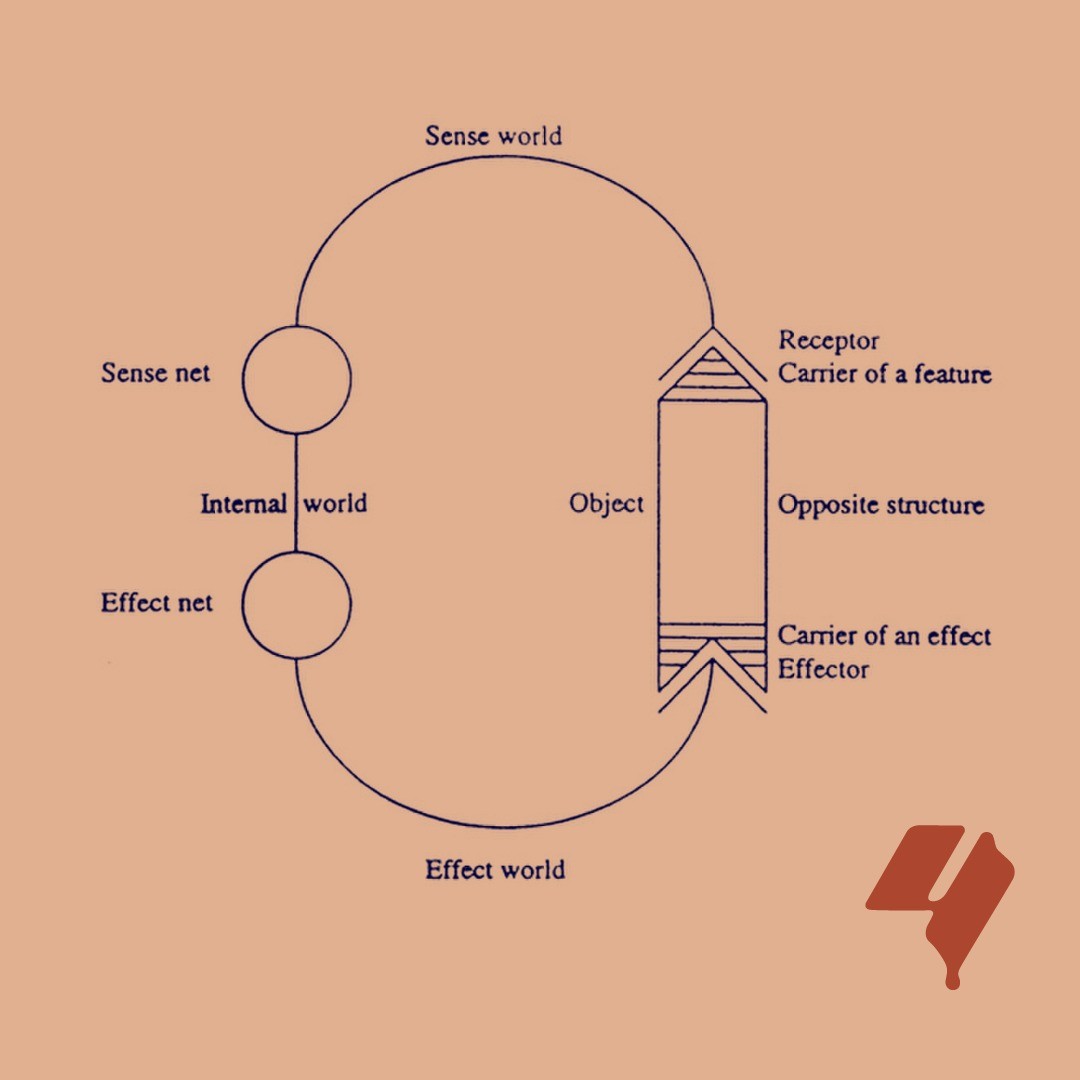
L’ambiente non è uno spazio neutro e unitario, ma un circuito percettivo-operativo che si lega con il soggetto che lo abita.
A ciascun essere vivente il proprio specifico ambiente, segni specifici rappresentano per il soggetto marche percettive e operative di diversa natura:
chimiche, meccaniche, motorie o visive, ma anche mnemoniche e magiche. Von Uexküll riporta l’esempio di una bambina che nel tronco di un albero veda il volto di una strega,
la specifica tonalità percettivo-operativa di quell’ambiente per quella bambina non risulta, all’osservazione di von Uexküll, meno concreta.
Il mondo si frantuma, non è più “luogo comune”, palcoscenico per l’essere umano, con esso salta anche il pregiudizio antropocentrico che tutti gli altri esseri viventi vivano in quello stesso scenario.
Una quercia accoglie l’ambiente del picchio, della volpe e della formica, del boscaiolo e della bambina, “se si volessero mettere insieme tutte le proprietà contraddittorie che offre la quercia in quanto oggetto, si otterrebbe una sola cosa: il caos. Nonostante ciò queste proprietà compongono un unico soggetto, strutturato solidamente, che si fa portatore di tutti questi ambienti, senza però essere riconosciuto né riconoscibile dai soggetti di questi ambienti”.
Jacob von Uexküll introduced the concept of the environment, or Umwelt, into biology.
The environment is not a neutral, unified space, but a perceptual-operational circuit that is linked to the subject inhabiting it.
Each living being has its own specific environment; specific signs represent perceptual and operational markers of different kinds for the subject:
chemical, mechanical, motor, or visual, but also mnemonic and magical. Von Uexküll cites the example of a little girl who sees the face of a witch in a tree trunk;
the specific perceptual-operational character of that environment for that little girl is, in von Uexküll’s view, no less concrete.
The world shatters; it is no longer a “commonplace,” a stage for human beings, and with it vanishes the anthropocentric prejudice that all other living beings inhabit that same scenario.
An oak tree encompasses the environments of the woodpecker, the fox, and the ant, of the woodcutter and the little girl; “if one were to bring together all the contradictory properties that the oak tree offers as an object, one would obtain a single thing: chaos. Despite this, these properties make up a single, solidly structured subject that serves as the bearer of all these environments, without, however, being recognized or recognizable by the subjects of these environments.”

 :
: